FIFO tickets and medicals: what employers ask for
For most FIFO jobs the must-haves are short: a manual car licence, a pass on a pre-employment medical and drug and alcohol test, often a national police clearance, and the right to work in Australia. Tickets on top of that depend on the job. Queensland coal adds two of its own, the Standard 11 induction and the coal board medical, and you usually don't need either until an employer has picked you.
What nearly every employer checks
Start with the driver's licence, and make it a manual one. Gold Fields asks for a current manual licence on its Granny Smith nipper job (8/6 days, 7/7 nights, FIFO from Perth), and CITIC Pacific Mining wants a current WA manual licence for its HV maintenance technicians at Cape Preston. An automatic-only licence rules you out of ads like those.
Next is the medical and the drug and alcohol test. Every BHP ad we read ends with a paragraph saying checks may include police checks, a medical, drug and alcohol testing and right to work checks. PLS (Pilbara Minerals) uses almost the same list but says the checks will be done. Fortescue's careers FAQ lists a pre-employment medical as one of the steps after the interview. The camp operators are blunter: Sodexo, Civeo and Compass Group's ESS ads list passing a pre-employment medical and a drug and alcohol test as a plain requirement.
A national police clearance shows up in ads from PLS, Civeo, ESS and Sodexo. In WA you apply online, it costs $66 as of July 2026, and if nothing needs a closer look it can arrive within minutes. WA Police don't put an expiry on it, but employers set their own limit. Sodexo's bus driver ad wants one dated within the last six months. You can sort it out before you apply, which is one less thing to wait on once an offer comes.
Working rights come last. PLS asks for full working rights in Australia on its maintainer operator ad. Civeo takes working holiday visa holders for some Queensland village jobs if they have at least six months left on the visa.
The medical and the drug test: who pays and what's in it
You shouldn't be paying for any of it. Sodexo says it covers onboarding costs such as medicals and inductions, ESS says its medical and drug screen are at the company's cost, and Civeo books the medical at a clinic near you and says background checks cost the candidate nothing. Rio Tinto's careers FAQ says it never asks candidates for payment during recruitment. If someone wants a fee before they'll put you forward, walk away.
WA's mines safety laws changed on 31 March 2022, and the current Work Health and Safety (Mines) Regulations don't set out a standard entry medical. Regulation 641 makes the mine operator manage the risk of alcohol and drug use at the site, but it doesn't require a test, so testing is each employer's own policy. Where an employer does run health monitoring, WorkSafe's guide says the employer pays, including travel and your time, and a doctor experienced in health monitoring runs it. If your job needs hearing protection to control noise, regulation 58 requires a hearing test within three months of starting and at least every two years after that.
The employers we checked don't publish what their medical includes, so we won't guess at it here. Turn up sober. WorkSafe WA's 2014 guidance note on drugs at work names the Australian standards for urine and oral fluid tests, AS/NZS 4308 and AS 4760.
Queensland coal: Standard 11 and the coal board medical
Queensland coal runs under its own law, the Coal Mining Safety and Health Act 1999. "Standard 11" is short for Recognised Standard 11, Training in coal mines, made under it. The course people mean when they say they have their Standard 11 is a skill set of six national units. For surface mines it is RIISS00034, made up of RIIWHS201E (work safely), RIIRIS201E (local risk control), RIICOM201E (communicate in the workplace), RIIGOV201E (site work processes), RIIERR205D (initial response first aid) and RIIERR302E (respond to local emergencies). The underground version, RIISS00033, swaps the last unit for RIIERR203E, escape from hazardous situations unaided.
The law behind it is short. Under section 83 of the Coal Mining Safety and Health Regulation 2017 a new worker can't do any task at a coal mine until they have finished induction training for that mine, and section 84 requires refresher training at least every five years. Civil Safety, one of the training providers, says some employers want the units refreshed every two to five years.
In October 2026 Civil Safety listed its Standard 11 course at $695, online modules plus one face to face day, and AOT listed $725 for two days in Emerald. Pay for it up front only if you're set on Bowen Basin coal and have nothing else on your resume. Of the current ads we read, one asked for it, an ESS site administrator job at McArthur River in the Northern Territory, and there it was listed as desirable. BHP's current coal ads at Peak Downs don't list it.
The coal board medical is the health assessment under the Coal Mine Workers' Health Scheme. Every Queensland coal mine worker needs one before starting and when changing employers, then at least every five years. The employer arranges it through its Appointed Medical Adviser and pays for it. Section 46A of the regulation sets out what it covers: a chest examination, spirometry (a breathing test) and a chest X-ray that is read twice. A worker with two employers can hold a current assessment with each. It isn't something to buy before you apply.

Western Australia: skip MARCSTA, the induction comes from the site
You may still hear that you need a MARCSTA ticket to work on a WA mine. You don't. MARCSTA's own course page now says the induction is no longer run by MARCSTA and the page is there for historical purposes only. MARCSTA was never a registered training organisation, so the course was never nationally accredited either.
The induction that counts in WA is the one the mine gives you. Regulation 675BA of the WA mines regulations makes the mine operator give every worker information and training on the operation, its safety procedures and their tasks before they start. Regulation 675BB makes the employer check you're competent for your tasks and any plant you'll run before you begin. Some site inductions can't be bought by job seekers at all. Aveling, the Perth training provider that runs Rio Tinto Iron Ore's WA inductions, says employers book them on behalf of their workers.
High risk work licences and the HR truck licence
These are worth paying for yourself, because plenty of ads list them as essential. In WA a high risk work licence needs training and an assessment with a registered training organisation, you have to be 18 or older, and you apply to WorkSafe within 60 days of the assessment. The licence lasts five years and can be used anywhere in Australia while it's current. You can renew from 90 days before expiry up to 12 months after. Leave it longer than that and you may have to do the training again.
The classes FIFO ads name most are forklift (LF), dogging (DG), basic rigging (RB) and the boom-type elevating work platform with a boom of 11 metres or more (WP). Gold Fields lists forklift, basic rigging and dogging as essential for an auto electrician at Agnew. Fortescue wants an HR licence and a forklift ticket for a dewatering fitter at Eliwana.
The heavy rigid (HR) truck licence is a road licence from the state transport department, not a high risk work licence. In both WA and Queensland you need to have held a car licence for two years, or a light or medium rigid licence for one year, before you can get HR. In Queensland that holding time has to fall within the last five years. HR covers trucks over 8 tonnes with three or more axles, towing a trailer up to 9 tonnes. It comes up for fitters, service crews and operators: BHP's dragline operator ad at Peak Downs asks for HR or a site HR authorisation, and PLS sets HR as the minimum for its service person at Pilgangoora. Our truck driver jobs page lists the driving roles on this board.
Heights, confined spaces, first aid and the white card
Working at heights and confined space entry are units of competency, not licences. A new release on training.gov.au on 2 September 2026 dropped the letter from several codes, so working at heights is now RIIWHS204 and confined spaces is RIIWHS202. The old RIIWHS204E and RIIWHS202E are listed as superseded and equivalent, so a certificate with the letter on it is the same unit. Fortescue lists working at heights, EWP or forklift as an advantage for its trades assistant jobs at Cloudbreak, and at that level they help you stand out.
First aid is HLTAID011, Provide First Aid. The WA code of practice for first aid says CPR should be refreshed every year and the first aid qualification renewed every three years. That's guidance, not law, but keep it current.
The white card is the construction induction, now unit CPCWHS1001. WorkSafe WA says you need it at a mine only when the work counts as construction under the mines regulations, and shutdowns can count. A white card doesn't expire, but in WA it stops being valid if you spend two straight years out of construction work. Some camp jobs ask for it as well. ESS listed a white card as a must on a hospitality job in remote NSW.
What to get before you apply, and what to wait for
Get these yourself: a manual licence, a police certificate, and first aid. Add an RSA if you're going for camp bar work, since Civeo asks for one on its Karratha assistant village manager job. If you're aiming at trades assistant or general labour work, working at heights and a forklift licence are the two we'd add next. Leave the site induction, the employer medical and the coal board medical alone, because the employer arranges those once you're hired.
No tickets at all isn't the end of it. Fortescue's blast operator trainee job at Eliwana is open to people new to mining with a manual licence, and Gold Fields runs a 12 month trainee processing operator role at Gruyere. Our guide to getting a FIFO job with no experience covers those doors in more detail, and the rosters guide explains what 8/6 or 14/7 means for your time at home.
When you apply, put your licence class and every ticket with its unit code near the top of the first page, so the screener can tick them off fast. For help with that, our resume service writes resumes for FIFO applications. Then apply on the employer's own careers site. BHP (careers.bhp.com), Fortescue, Gold Fields, Rio Tinto and Sodexo all post FIFO roles there, and our list of companies hiring FIFO direct has the rest.
Where to look on this board
For coal, start with the Moranbah FIFO jobs and the wider Queensland FIFO jobs page. If you hold an HR licence, check the truck driver page linked above, and if you're starting out with a fresh set of tickets, the trades assistant and entry level FIFO jobs pages are the best fit.
Sign up for job alerts on the fifojobs.com home page to get new jobs by email.
Sources
- Business Queensland: Recognised standards for mining
- CQUniversity: RIISS00034 Standard 11 Generic Coal Mine (Surface) Induction
- training.gov.au: RIISS00033 skill set
- Queensland Legislation: Coal Mining Safety and Health Regulation 2017
- Business Queensland: Coal mine worker health assessment frequency and payment
- Civil Safety: Standard 11 Mining Induction Course
- AOT: Standard 11 Mining Induction
- Occupational Health Society of Australia: MARCSTA Work Health and Safety Induction
- WA Legislation: Work Health and Safety (Mines) Regulations 2022
- Aveling: Rio Tinto inductions
- WorkSafe WA: Health monitoring guide
- WorkSafe WA: Alcohol and other drugs at the workplace
- WA Government: Apply for a National Police Certificate
- WA Police Force: Information access fees
- WorkSafe WA: High risk work licensing guide
- WA Government: High risk work licensing
- WA Government: High risk work licence renewal
- WA Government: Upgrade or add a driver's licence category
- Queensland Government: Upgrading your licence
- training.gov.au: RIIWHS204 Work safely at heights
- training.gov.au: HLTAID011 Provide First Aid
- training.gov.au: CPCWHS1001 Prepare to work safely in the construction industry
- WorkSafe WA: Code of practice, first aid in the workplace
- WorkSafe WA: Construction on a mine site
- WorkSafe WA: Construction induction training
- Fortescue: Careers FAQ
- Rio Tinto: Careers FAQs
- BHP: Dragline Operators, Peak Downs
- PLS: Service Person, Pilgangoora
- Gold Fields: Nipper, Granny Smith
- CITIC Pacific Mining: HV Maintenance Technician, Cape Preston
- PLS: Maintainer Operator
- Sodexo: Assistant Village Manager, FIFO 8:6 WA
- Compass Group (ESS): Hospitality Allrounders, remote NSW
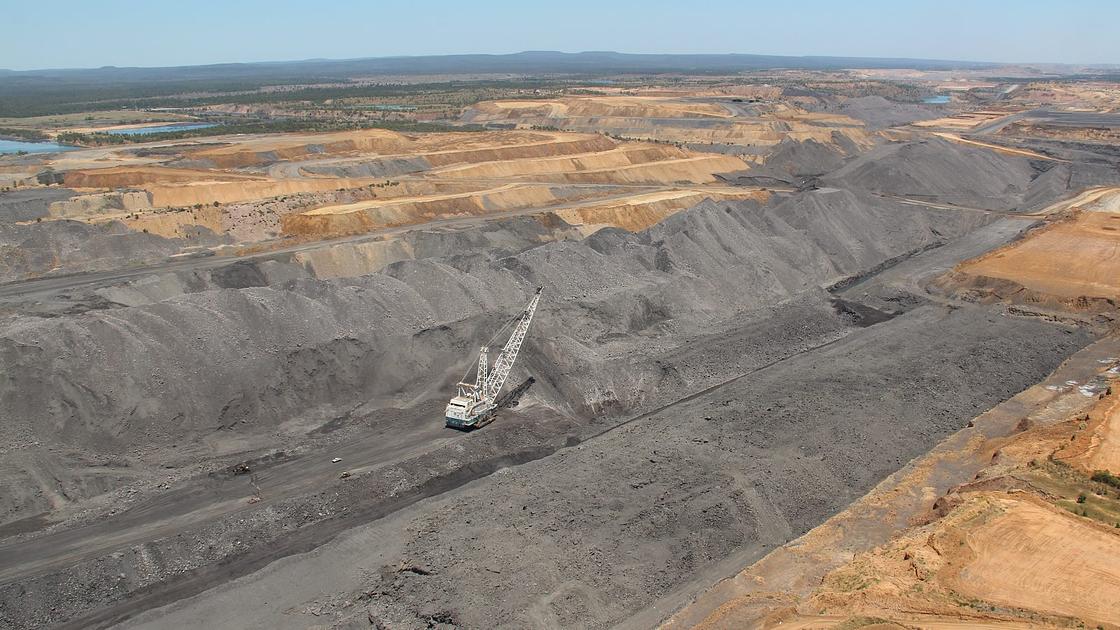
- Cover photo (cropped): Central Queensland- Peak Downs and Saraji coal mine, 2012 by Beyond Coal & Gas Image Library, CC BY 2.0